Give Every Gadget a Job: The Outlet-Space Audit That Keeps Your Tech Collection Honest
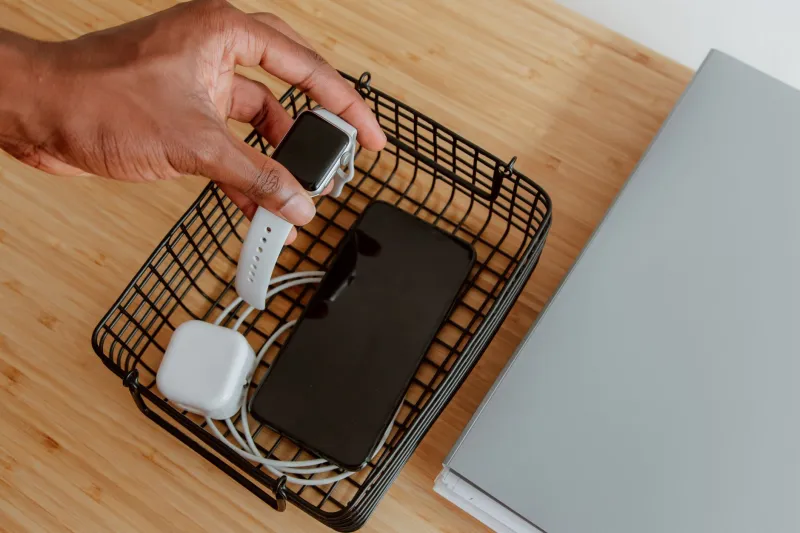
Walk into most American apartments and you'll find the same quiet confession: a drawer (or two, or a whole bin) full of yesterday's tech. The old Kindle that got replaced by a newer Kindle. Three pairs of earbuds, only one of which actually gets used. A smart plug still in its packaging from a Prime Day impulse two years ago.
Here's the thing — none of that stuff is free. It's sitting on shelves, hogging outlets, and quietly depreciating while you wait for a garage sale that never happens. At EE-Shopp, we've been testing a simple framework we call the outlet-space audit, and it's changed how we buy, upgrade, and let go.
The Core Idea: Every Device Has to Earn Its Spot
The rule is brutally simple: a gadget can only live in your home if it's actively doing a job nothing else can do.
That means before any new purchase, you answer one question: what is this replacing? Not "what is this better than?" — what is it actually kicking out the door. If the answer is "nothing, it's just also nice to have," that's a yellow flag.
A two-bedroom apartment we profiled in testing this system went from 31 active gadgets to 19 in a single weekend — and the owner didn't feel like she'd lost anything. She'd just stopped paying "rent" (in space, outlets, and mental load) to devices that had already been benched.
Setting Your Hard Limits
Start by picking a cap for each category. These numbers aren't sacred — they're guardrails:
- Chargers and cables: one per device type, full stop
- Speakers: one main, one portable
- Earbuds/headphones: one pair (yes, really)
- Kitchen gadgets: if it hasn't been plugged in for 90 days, it's on notice
- Smart home devices: each one needs a reason a dumb alternative can't handle
When you want something new in a full category, something in that category has to leave first. It's a budget, but measured in outlets instead of dollars.
The 'Sell or Donate' Pipeline
Here's where the audit stops being restrictive and starts being profitable. Old devices aren't trash — they're trade-in credits waiting to happen.
The pipeline, step by step:
- Pull it out and wipe it. Factory reset everything — phones, tablets, speakers, streaming sticks. Sign out of every account first.
- Price it in five minutes. Check eBay sold listings (not asking prices — sold prices) and trade-in quotes from Best Buy, Amazon, and Apple. Whichever is higher wins.
- List it within 48 hours. The longer it sits in your "to sell" pile, the more likely it migrates back to a drawer. Facebook Marketplace is ideal for local stuff; eBay or Swappa for phones and niche gear.
- If it's under $25, donate it. Goodwill, the Salvation Army, or your local library's tech drive. Don't let a $15 item eat three hours of your life.
- Route the money to a dedicated fund. Not the checking account — a separate pot labeled "next upgrade." Watching it grow is half the fun.
One tester sold four devices from a single kitchen drawer and covered more than half the cost of a new air fryer — which then replaced two other countertop appliances. Net drawer change: negative three items.
Your Printable Audit Checklist
Run through this once per quarter — it takes about an hour:
- List every device that's plugged in or charged in the last 30 days
- Flag anything not on that list
- For each flagged item: sell, donate, or recycle (never the trash — check your city's e-waste rules)
- Count devices per category against your caps
- Write down your "replacement rule" for the next purchase you're eyeing
- Move upgrade fund money where you can see it
Before and After: What This Looks Like in Real Life
Before: A media console with a streaming stick, an old gaming console "for guests," a Blu-ray player, and a soundbar plus a separate receiver. Four remotes. Constant HDMI drama.
After: One streaming stick and one soundbar. The Blu-rays went digital during a sale; the console sold for $180 and funded the whole cleanup. Same entertainment, half the hardware.
Before: A nightstand with a phone charger, a watch charger, an earbud case, and a bedside speaker — plus last year's phone "as a backup."
After: One charging pad, one pair of earbuds, and the old phone sold. The "backup" was never going to work anyway — batteries degrade sitting in drawers.
The Payoff Isn't Just Space
The real win is how this changes your buying. When every new gadget requires an eviction notice, you naturally slow down. You research harder. You realize the $29 impulse buy isn't $29 — it's $29 plus the hassle of dealing with whatever it replaces.
And when upgrade day comes, you're not starting from zero. You've got a funded stash, a clear idea of what's leaving, and a home that doesn't look like a Best Buy stockroom. That's what we'd call shopping smart.