Stop Paying the Gadget Tax: 7 Everyday Purchases Where 'Convenience' Costs 10x More
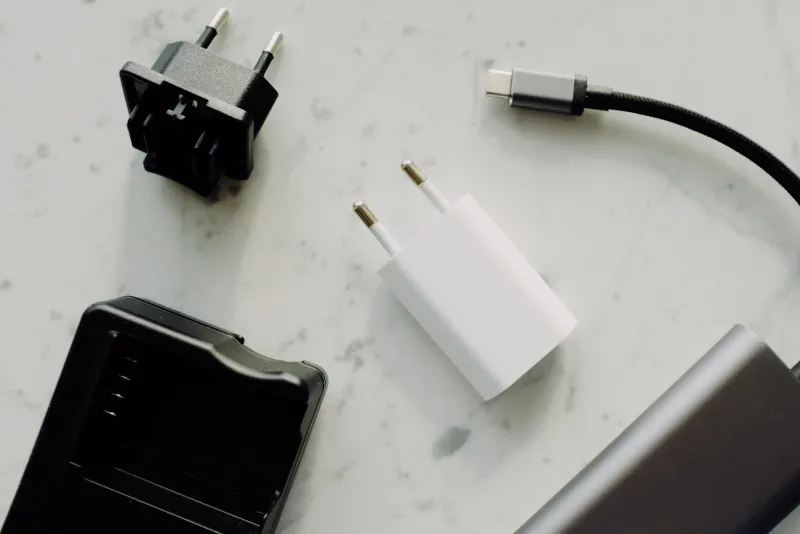
Let's get something straight: we love gadgets. We run a whole site about them. But there's a difference between paying for engineering and paying for a logo, and lately the gap between those two things has gotten ridiculous. We're calling it the gadget tax — the premium you pay for the 'convenient' branded version of something that works just as well in its plain, unglamorous form.
Here are seven of the worst offenders, and what to buy instead.
1. The $90 'Fast' Phone Charger
A first-party fast charger from a major phone brand can run $60–$90. A certified USB-C Power Delivery charger from a reputable third party? Often $15–$25. The charging standard is public — that's the whole point of USB Power Delivery — and independent lab testing has repeatedly shown third-party chargers meeting the same wattage claims. Buy from a brand with actual certifications (UL listing matters), not the one with the fruit on the box.
The alternative: Any PD-certified 30W+ USB-C charger from a known accessories brand. Same phone, same charging speed, same wall outlet.
2. Proprietary Smart Home Hubs
Plenty of smart home ecosystems want you to buy their bridge, their hub, and their subscription before a single light turns on. Meanwhile, the Matter standard has quietly unified much of the industry. A basic Thread border router or a modest hub that speaks Matter and Zigbee can run devices from a dozen brands — no ecosystem lock-in, no per-brand hardware.
The alternative: A Matter-compatible hub in the $50–$80 range instead of stacking proprietary bridges for every brand you own.
3. Name-Brand HDMI and Ethernet Cables
This one's practically a classic, but people still fall for it. HDMI is a digital signal: the cable either works or it doesn't. A $130 'audiophile-grade' HDMI cable delivers the exact same picture as a $10 one from the hardware store. Same story with Cat6 Ethernet — the spec is the spec.
The alternative: Monoprice-style generic cables, certified for the spec you need. Spend the $120 you saved on literally anything else.
4. The Subscription-Fee Smart Thermometer
Cooking thermometers used to be a $15 probe and a dial. Now there are $100+ 'smart' thermometers with app pairing, and — increasingly — monthly subscriptions to access your own cooking data. The sensor technology inside a $20 instant-read is genuinely excellent these days; a reading takes one second either way.
The alternative: A well-reviewed instant-read probe thermometer, roughly $20–$30, zero apps, zero subscriptions, works forever.
5. First-Party Replacement Ear Tips, Bands, and Accessories
Losing an earbud tip or a watch band shouldn't feel like a car repair, but first-party replacements are priced like one. Third-party accessory makers produce silicone tips, bands, and cases in every size and color, frequently in multi-packs, for a fraction of the price.
The alternative: Multi-pack third-party tips and bands. Buy one first-party set if you're picky about fit; keep the cheap ones as backups.
6. 'Smart' Versions of Dumb Products
A smart water bottle that glows when you're dehydrated. A $250 smart salt dispenser. A Wi-Fi-enabled toothbrush that wants a subscription for 'premium brushing insights.' The convenience upgrade here is often just a notification you didn't ask for. The dumb versions of these products have been refined over decades and cost a tenth as much.
The alternative: Ask one question before buying: does the smart version do something I'd miss? If the answer is 'sends reminders,' keep your money.
7. The Branded Charging Cable at the Register
Checkout-line cables are the airport bottled water of tech. The exact same braided USB-C cable — same length, same amperage rating — is often $25–$35 at a brand-name kiosk and $8 online from an accessories maker with real reviews.
The alternative: Buy two or three quality cables online, keep one in the car, one in the bag. You'll never pay register prices again.
The Pattern Behind the Gadget Tax
Notice the common thread? In almost every case, the expensive version isn't better technology — it's better positioning. Proprietary standards, ecosystem lock-in, checkout convenience, and subscription hooks are business models, not features.
That's not to say brand-name gear is never worth it. First-party devices themselves — the phone, the laptop, the console — often justify their price with real engineering. The tax shows up in the peripherals and add-ons, where the underlying tech is commoditized and the markup is pure margin.
So the next time you're about to check out, run the ten-times test: is there a generic, certified, or open-standard version of this that does the same job? If yes, that's not a compromise. That's the smarter buy — and your gadget budget just got a whole lot bigger.